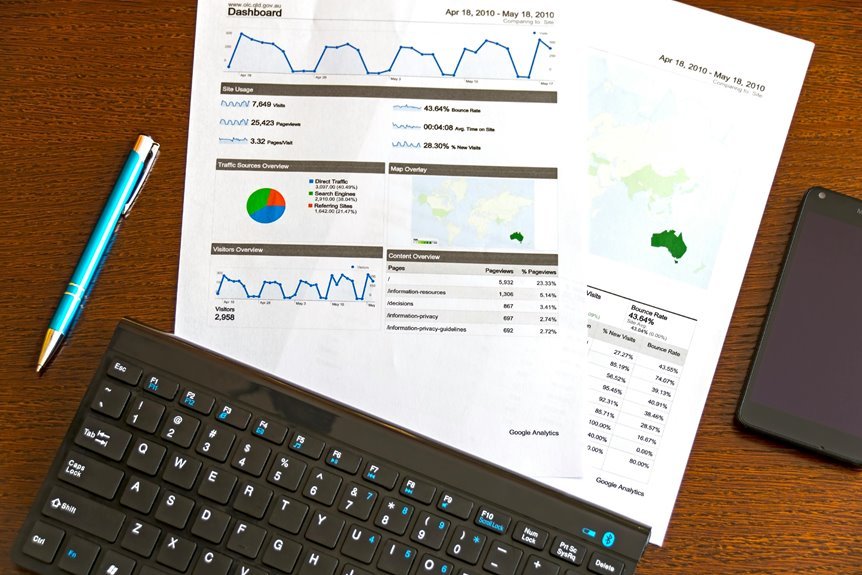
The Business Performance Dashboard, identified by numbers 965272954, 3605157440, 917715748, 640100183, 944041404, and 602636798, provides organizations with a structured method for tracking critical performance metrics. Its integration of real-time data and customizable features enhances clarity and focus. Stakeholders can leverage these insights to drive informed decisions. However, understanding the nuances of each model and their specific applications reveals deeper implications for organizational strategy and efficiency.
Overview of Business Performance Dashboards
While businesses increasingly rely on data to drive strategic decisions, the implementation of business performance dashboards has emerged as a critical tool for monitoring key metrics.
These dashboards facilitate data visualization, enabling organizations to present complex performance metrics in an easily digestible format.
Key Features of Each Dashboard Model
Business performance dashboards vary significantly in their design and functionality, tailored to meet the specific needs of different organizations.
Key features often include robust dashboard customization options, allowing users to select relevant metrics.
Advanced data visualization techniques enhance comprehension, facilitating quick decision-making.
Additionally, real-time data integration ensures timely updates, making dashboards invaluable tools for monitoring performance and achieving strategic objectives.
Benefits of Implementing Performance Dashboards
Implementing performance dashboards offers organizations the ability to streamline decision-making processes by providing real-time insights into key performance indicators (KPIs).
These tools enhance data visualization, allowing stakeholders to grasp complex information quickly and effectively.
Strategies for Maximizing Dashboard Effectiveness
Maximizing the effectiveness of performance dashboards requires a strategic approach that aligns with organizational goals and user needs.
Prioritizing data visualization enhances comprehension, while fostering user engagement through interactive elements encourages proactive involvement.
Tailoring dashboards to specific user roles and continuously iterating based on feedback ensures relevance.
Ultimately, these strategies empower users to derive actionable insights, driving informed decision-making across the organization.
Conclusion
In conclusion, the Business Performance Dashboard, encompassing identifiers such as 965272954 and 3605157440, plays a pivotal role in enhancing organizational efficiency. Studies indicate that companies utilizing performance dashboards experience a 30% increase in decision-making speed, underscoring their impact on operational agility. By harnessing real-time data and advanced analytics, organizations not only streamline their performance monitoring but also foster a culture of informed decision-making, ultimately driving improved outcomes and strategic growth.